
The Short Answer: To legally purchase a suppressor in the United States, you must obtain a tax stamp through the National Firearms Act (NFA). This involves submitting an ATF Form 4, undergoing a background check, and paying a $200 tax stamp fee. After approval, you can legally own the suppressor, but the process can take several months due to processing time and wait times.
Suppressors are regulated by the federal government as NFA items, meaning that any purchase or transfer requires compliance with strict laws. The tax stamp is a crucial part of the suppressor purchase process, ensuring that all legal requirements are met for firearm owners.
In this blog, we'll walk you through the steps for getting a suppressor tax stamp, explain why it's necessary, and discuss some potential upcoming changes in the law that could affect suppressor ownership in the future.
A tax stamp is a legal requirement for owning certain regulated firearms, including suppressors, under the National Firearms Act (NFA). The $200 tax stamp is a one-time fee that ensures a suppressor is legally registered with the Bureau of Alcohol, Tobacco, Firearms, and Explosives (ATF), a vital step in the suppressor purchase process.
Suppressors are considered NFA items, which means they are subject to strict federal regulations to prevent misuse. The National Firearms Act was originally passed in 1934 to regulate firearms like machine guns and short-barreled rifles, and it has since been expanded to include suppressors. The tax stamp helps maintain control over the ownership and transfer of these devices, ensuring they are only in the hands of responsible owners.
The tax stamp application process involves submitting ATF Form 4 and undergoing a thorough background check. This includes fingerprint cards, passport photos, and a review of any past criminal history. Once the ATF has processed the application, the firearm suppressor is officially registered in the owner's name, and the tax stamp is issued.
The tax stamp serves several purposes:
Owning a suppressor without the appropriate tax stamp is illegal and could result in severe legal consequences, including fines or imprisonment. The tax stamp fee ensures that suppressors are properly tracked and that firearm owners are complying with federal regulations. It also serves as a record of ownership, which can be important for legal purposes in the future.
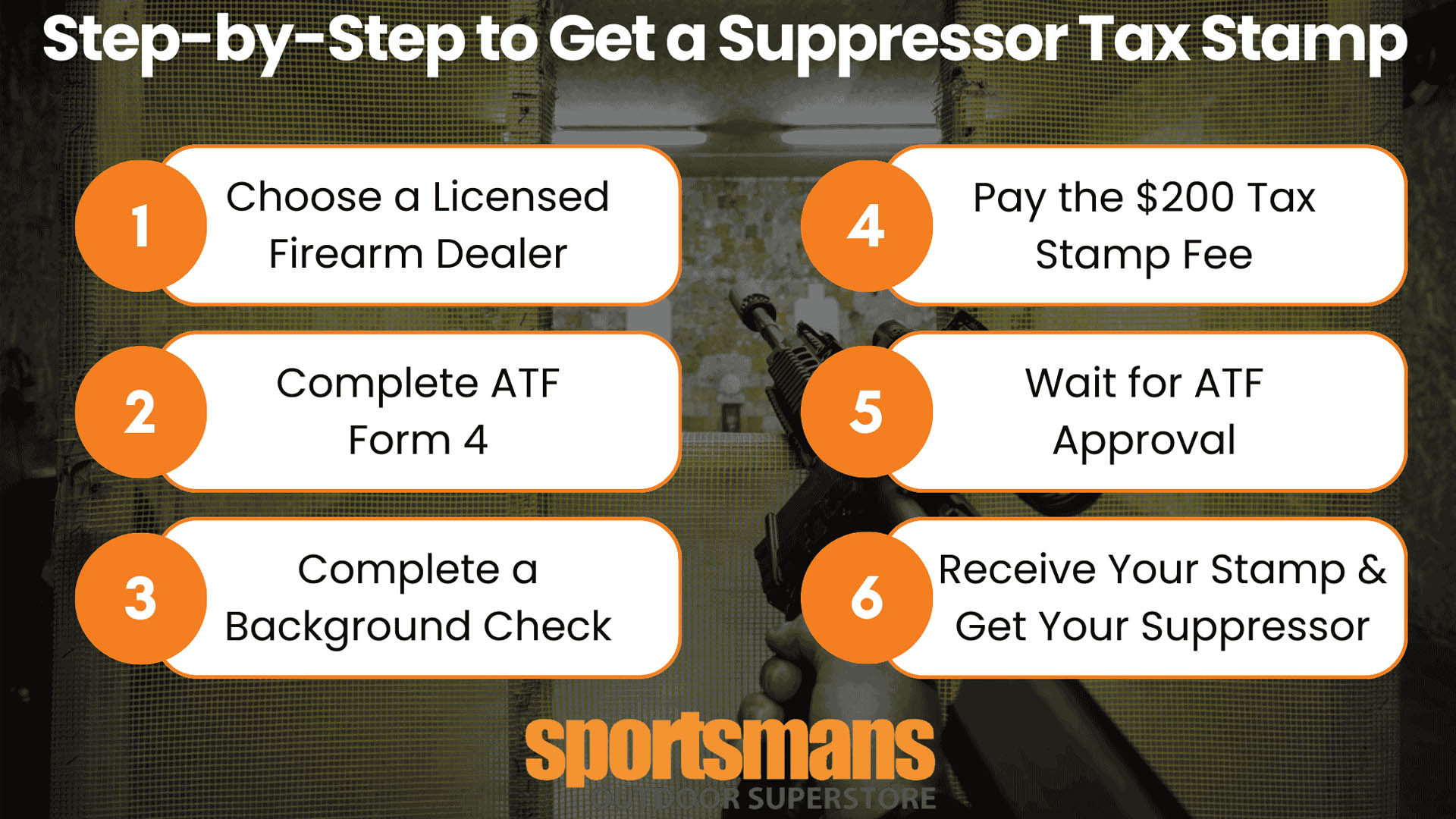
Purchasing a suppressor requires careful attention to legal details to ensure compliance with both federal and state laws. Here's a step-by-step guide to help you navigate the tax stamp process and legally acquire a suppressor.
To begin the process, you need to purchase the suppressor from a federal firearms licensee (FFL) who is authorized to sell NFA items. The dealer will guide you through the necessary paperwork and ensure the suppressor is properly registered with the ATF.
Once you've selected your suppressor, you'll need to complete ATF Form 4 (Application for Tax Paid Transfer and Registration of Firearm). This form requires information about yourself and the suppressor, including the make, model, and serial number.
Along with the form, you'll also need to submit your fingerprint cards and passport-sized photos as part of the background check process. The ATF uses these to run a check with law enforcement agencies to ensure you have no criminal history that would disqualify you from owning a suppressor.
The $200 tax stamp fee is a one-time cost required for each suppressor purchase. This fee is submitted along with the completed ATF Form 4. The payment covers the administrative costs of processing the application and ensuring the suppressor is properly registered in your name.
After submitting the paperwork and fee, the ATF will process your application. This can take several months due to the wait times involved in conducting a thorough background check and processing all applications. The approval time can vary depending on the ATF's current workload, but it typically ranges from 6 to 12 months.
Once approved, you will receive your tax stamp, which serves as official documentation that your suppressor is legally registered. You'll then be able to pick up the suppressor from your licensed firearm dealer. Keep a copy of the approved form and your tax stamp as proof of legal ownership.
The suppressor tax stamp is an essential part of the legal process for purchasing and owning a suppressor. It ensures suppressor ownership is regulated and legally compliant. While it may seem like an added cost and effort, the tax stamp ensures that suppressors are owned responsibly and lawfully.
The tax stamp verifies that your suppressor is legally registered with the ATF and that you've met the necessary requirements for ownership. The $200 fee associated with the tax stamp helps fund the ATF's administration of NFA regulations, contributing to overall safety and law enforcement oversight.
By going through the process and obtaining the tax stamp, firearm owners ensure their suppressors are legally acquired, properly documented, and tracked for public safety.
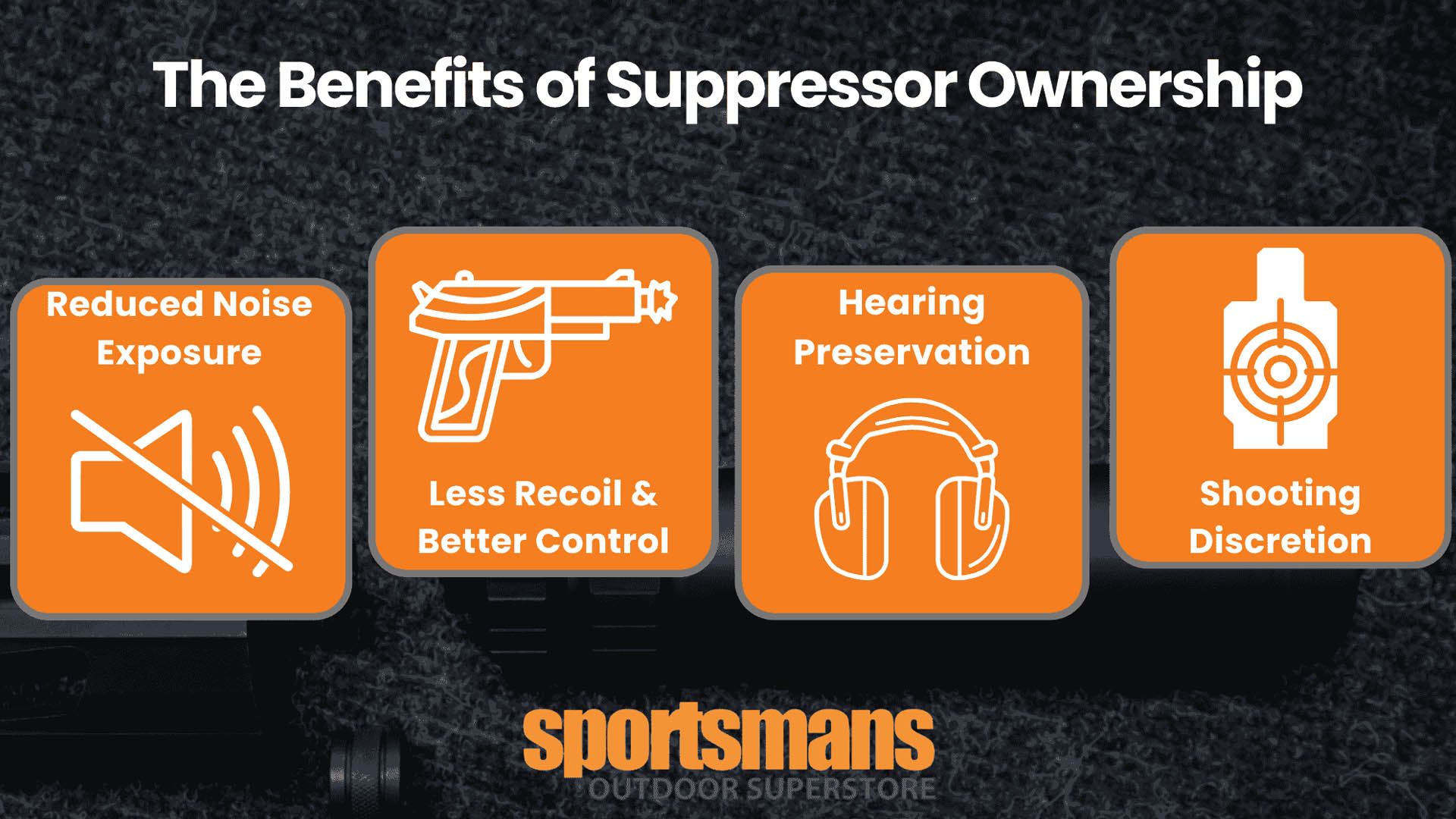
A suppressor lowers the sound of a firearm to safer and more manageable levels. This is helpful at public ranges, during backyard practice sessions in permitted areas, and when shooting in places where noise carries easily. The quieter report makes shooting more comfortable for you and less disruptive for those nearby.
Suppressors help counter some of the recoil and muzzle rise, allowing shooters to maintain steadier aim. This is useful for hunters who may need a quick second shot or for recreational shooters working on accuracy and consistency. Many find that suppressors also help them stay more confident behind the firearm.
Repeated exposure to loud gunfire can cause long-term hearing issues. By reducing the peak sound level, a suppressor adds another layer of hearing protection. Even when shooters use ear protection, the added reduction from a suppressor helps limit fatigue and protects hearing over time.
Hunters often appreciate suppressors because they reduce the disruption to wildlife and create a calmer shooting environment. Recreational shooters also benefit from less noise, making practice sessions more enjoyable and less intrusive to others on or near the range.
Congress passed legislation in 2025 that will change how suppressor transfers are handled under the National Firearms Act.
Beginning January 1, 2026, the long-standing $200 tax stamp fee for suppressors, short-barreled rifles, short-barreled shotguns, and certain AOWs will be eliminated. The transfer will still require a tax stamp, but the cost will be reduced to $0. All other steps in the NFA process stay in place.
This means applicants starting in 2026 will still complete ATF Form 4, submit fingerprints and photos, go through the background check, and wait for final approval. The suppressor will also be registered to the owner normally, but now the financial barrier that has been part of the NFA since 1934 is gone.
Even with the tax stamp fee removed, suppressors are not being deregulated. They remain controlled under federal law, so the following requirements still apply:
There is currently no signed legislation removing suppressors from the NFA entirely. Some proposals, such as past versions of the Hearing Protection Act, aimed for full deregulation, but none have passed into law.
The removal of the tax fee is expected to increase suppressor demand in 2026. While the ATF's eForms system has helped reduce some wait times, high application volume may cause processing delays. Prospective buyers should plan for the usual approval period, especially as more applicants enter the queue once the fee is lifted.
For now, applicants who submit before January 1, 2026 will still owe the $200 tax stamp fee.
Knowing what the ATF requires makes the suppressor process much easier to plan for, especially with the tax stamp fee set to disappear in 2026. Even with that change, the registration and approval steps remain the same, so having a clear picture of the process helps you move forward with confidence.
If you're planning to purchase a suppressor soon, it helps to stay informed so you can choose the right moment to begin the process. Sportsman's Outdoor Superstore carries suppressors from top manufacturers and works with trusted FFL/SOT partners who can walk you through every step of your application. When you're ready to get started, explore our selection and find the suppressor that fits your firearm, your needs, and your shooting style.